About Range of Products
Zari Embroidery Thread
A traditional and highly ornate thread used in India, Pakistan, and Bangladesh, renowned for its metallic, often glittering appearance.
About Zari Embroidery
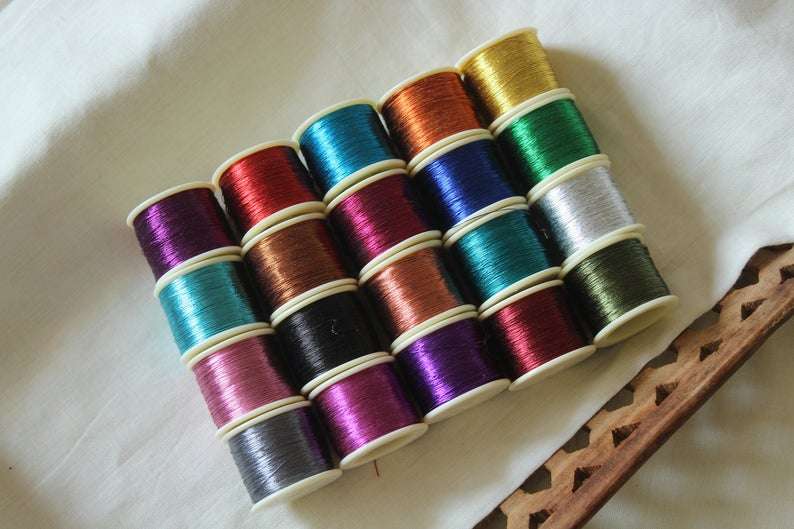
Zari embroidery thread is a traditional and highly prized metallic thread, most famously used in Indian, Pakistani, and Bangladeshi textiles to create intricate and opulent designs. It adds a distinctive glimmer and richness to fabrics, especially silks, making them suitable for special occasions, traditional garments like saris and lehengas, and ceremonial wear.
Here’s a detailed description:
Composition: Traditionally, real zari was made from fine threads of pure gold or silver, or silver gilded with gold, wrapped around a core yarn of silk, cotton, or other fibers. Due to the high cost of precious metals, modern zari broadly falls into three categories:
- Real Zari: Still made with genuine silver, often plated with real gold, wrapped around a silk or cotton core. It’s the most expensive and luxurious type.
- Imitation Zari: Typically uses copper wire (or other alloys) as the base, which is then electroplated with silver or gold, and wrapped around a core yarn. It offers a similar look at a more economical price.
- Metallic Zari (or Plastic Zari): The most common type today, it’s made by slitting metallized polyester film (often coated with various colors) into thin strips and winding them onto a core of polyester, viscose, nylon, or cotton. This modern version is lightweight, durable, and resistant to tarnishing, making it a practical choice for widespread use.
Appearance: Zari thread is characterized by its brilliant metallic sheen and lustrous finish, which can range from a subtle shimmer to a dazzling sparkle. It’s available in a wide array of metallic colors, with gold and silver being the most classic and sought-after.
Usage: Zari is primarily used in brocade weaving and embroidery (particularly Zardozi work). It’s woven into fabrics to create elaborate patterns or used for intricate surface embellishment, adding texture and dimension to the textile.
Cultural Significance: Zari work has a rich history, flourishing particularly during the Mughal era in India. It has long been associated with royalty, wealth, and auspicious occasions, symbolizing grandeur and cultural heritage.
Properties: Depending on its composition, zari can be durable, lightweight, and resistant to tarnishing (especially metallic zari). It’s designed to add a distinctive, luxurious aesthetic that elevates any fabric it adorns.